Hermano Mayor​​​​​​​
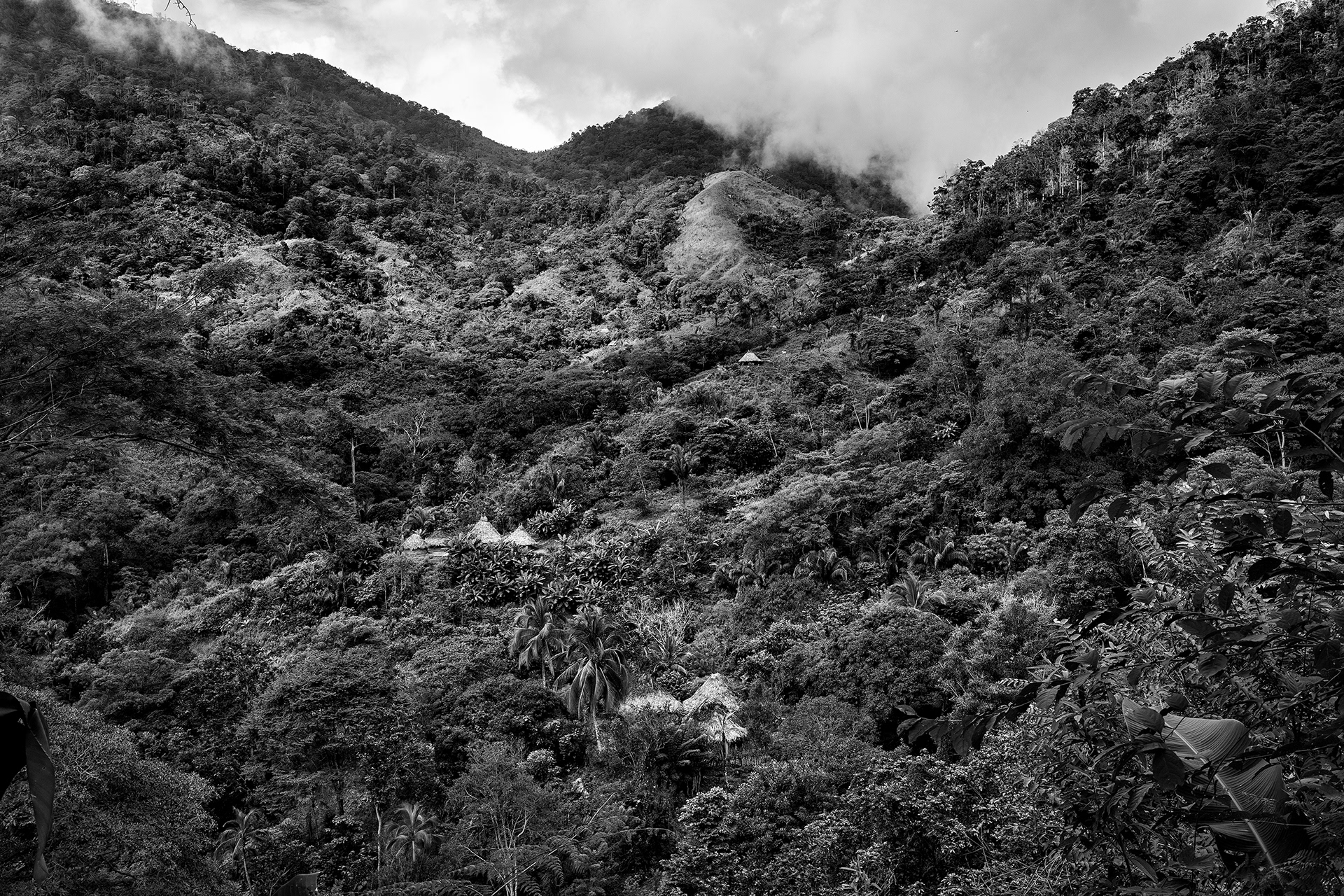
The Sierra Nevada de Santa Marta, located in northern Colombia between Panama and Venezuela, is (with its 5.700m ca.) the world’s highest coastal massif and the birthplace of one of the most advanced pre-Columbian civilizations, the Tyrona.
The Tyrona people were forced to seek refuge high in the mountains to escape persecution by the Spanish colonising army. As a result, they split into four populations: Arhuaco, Kankuamo, Kogui and Wiwa. Believed to have disappeared due to the scarcity of resources and inhospitable conditions of the territory, these groups remained isolated from the rest of the world for more than 300 years. 
The Tyrona descendants survived thanks to the use of the cornerstone of their culture, the sacred plant Ayu (Coca), which served as a food source, the base of their spiritual practices, and a source of knowledge. Due to their isolation, the Sierra Nevada inhabitants were able to keep nearly intact their archaic way of life, based on a semi-nomadic system, as well as their traditional knowledge and ancestral cosmogony. 
Nature is sacred in their eyes, and the Earth is our Mother, feeding and nourishing us; therefore, we must learn to cultivate our minds and thoughts, to respect and protect Her. As guardians of the knowledge of the  "Ley de Origen", inherited from their ancestors, they call themselves the Hermano Mayor (Older Brother). This law governs all aspects of life, from birth to death, as well as its relationship to the outside world, helping to maintain an existence in harmony with nature. 
This deep connection inspired a relentless defense and adherence to ancestral laws, granting them legal recognition of territorial ownership and its resource administration, making them a vital force in combating climate change.
My time with them offered profound insights into their culture and their deep understanding of the human spirit's connection to society and the environment. I felt like a Younger Brother who still has much to learn, and how precious is the teaching they can share with us. 


Known to its inhabitants as “The Heart of the World,” due to its unique blend of four climates, the Sierra Nevada de Santa Marta is considered a miniature version of the Earth. Climatic events in this area can reflect global trends, enabling its inhabitants to predict shifts in climate on a worldwide scale.
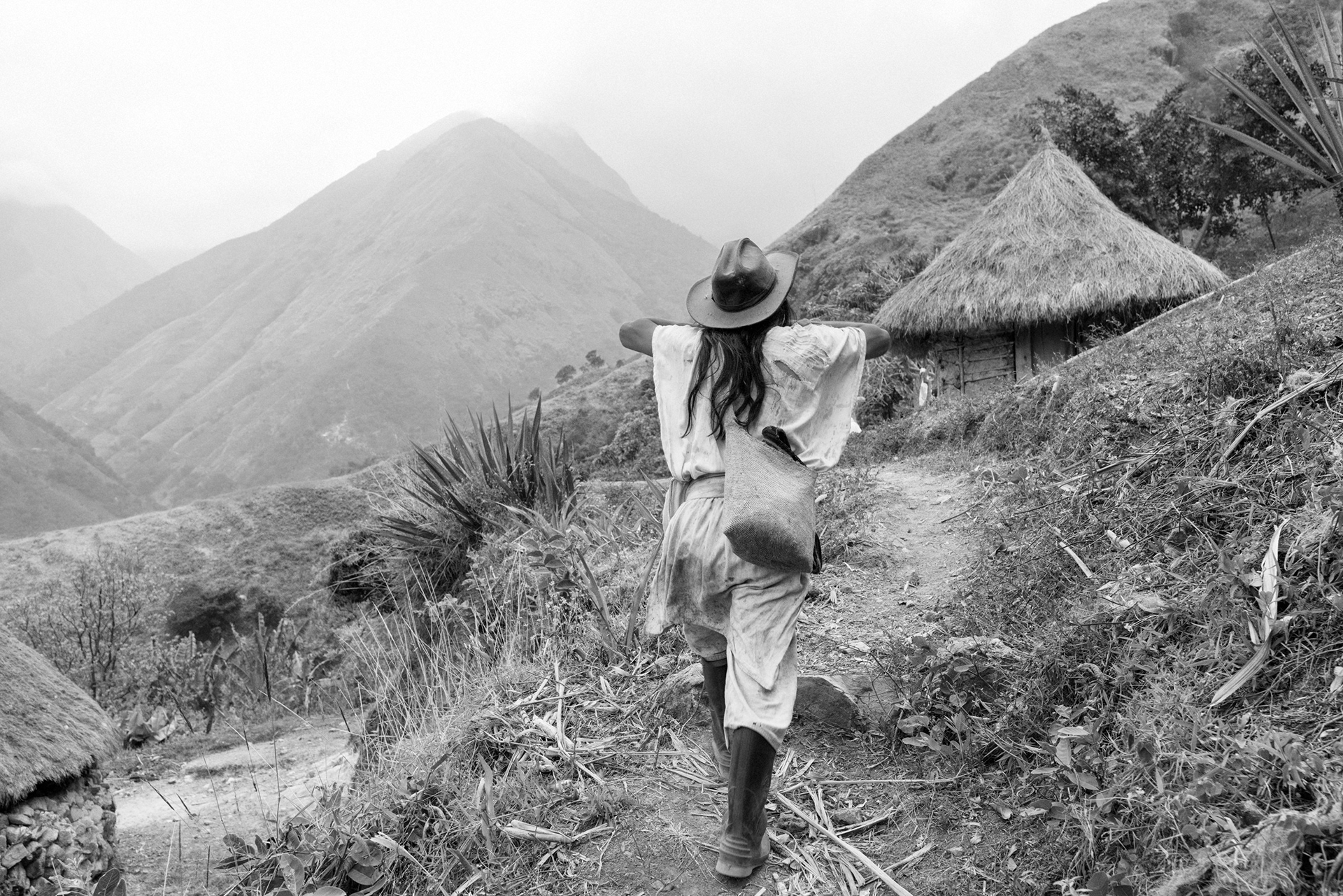
The families of the communities live in a semi-nomadic system, moving between different farms located across the various microclimatic zones of the region, allowing them to breed different types of livestock and cultivate a variety of crops and fruits such as Corn, Yuka, Sugarcane, Arracacha, Beans,Platano, Potatoes, and Cabbage.
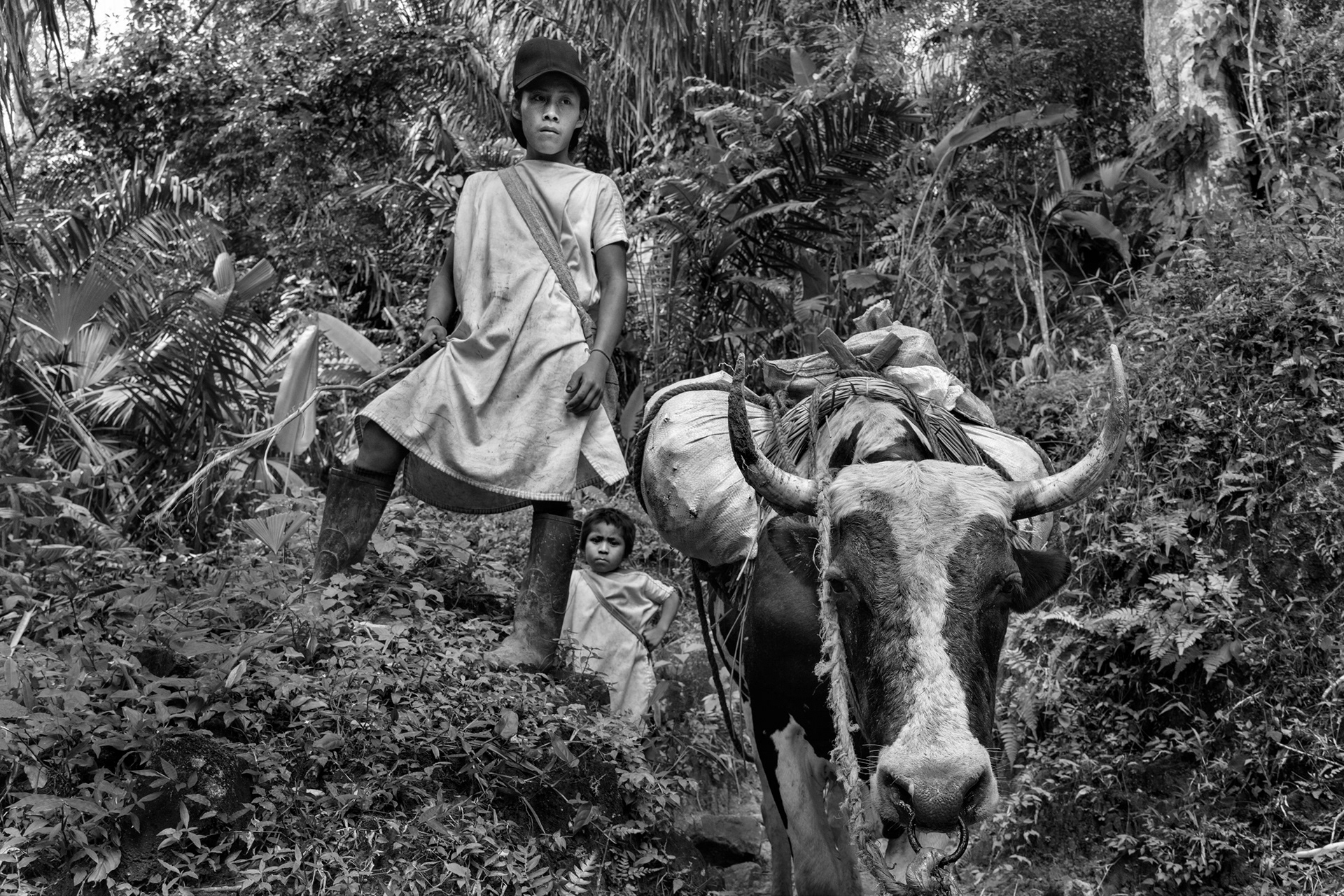
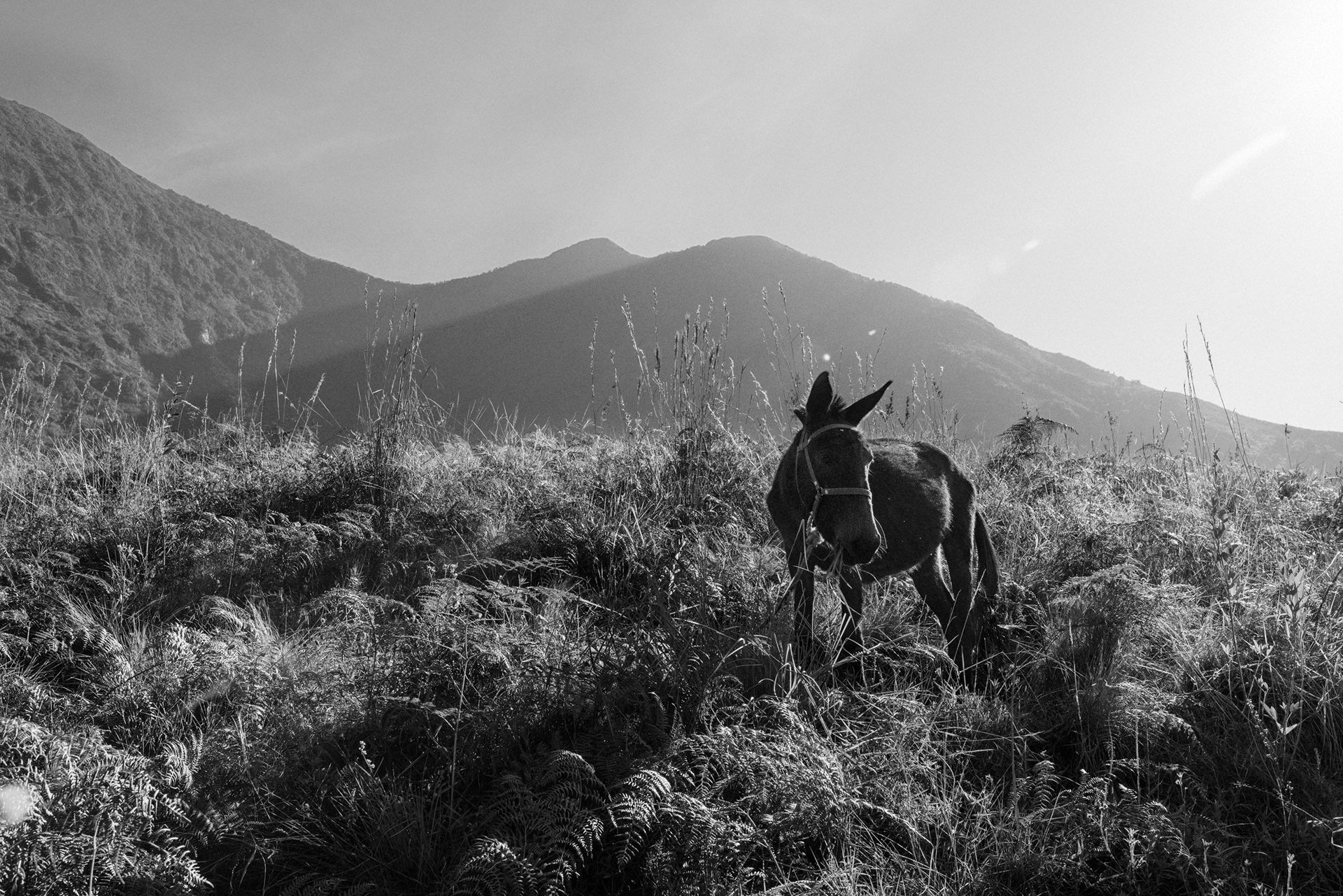
The settlements can be separated by several hours or even days of walking. Access to these remote areas is primarily through “Caminos” or“ Trochas,” narrow paths that can only be navigated on foot or with the help of pack animals like donkeys, horses, or cows.
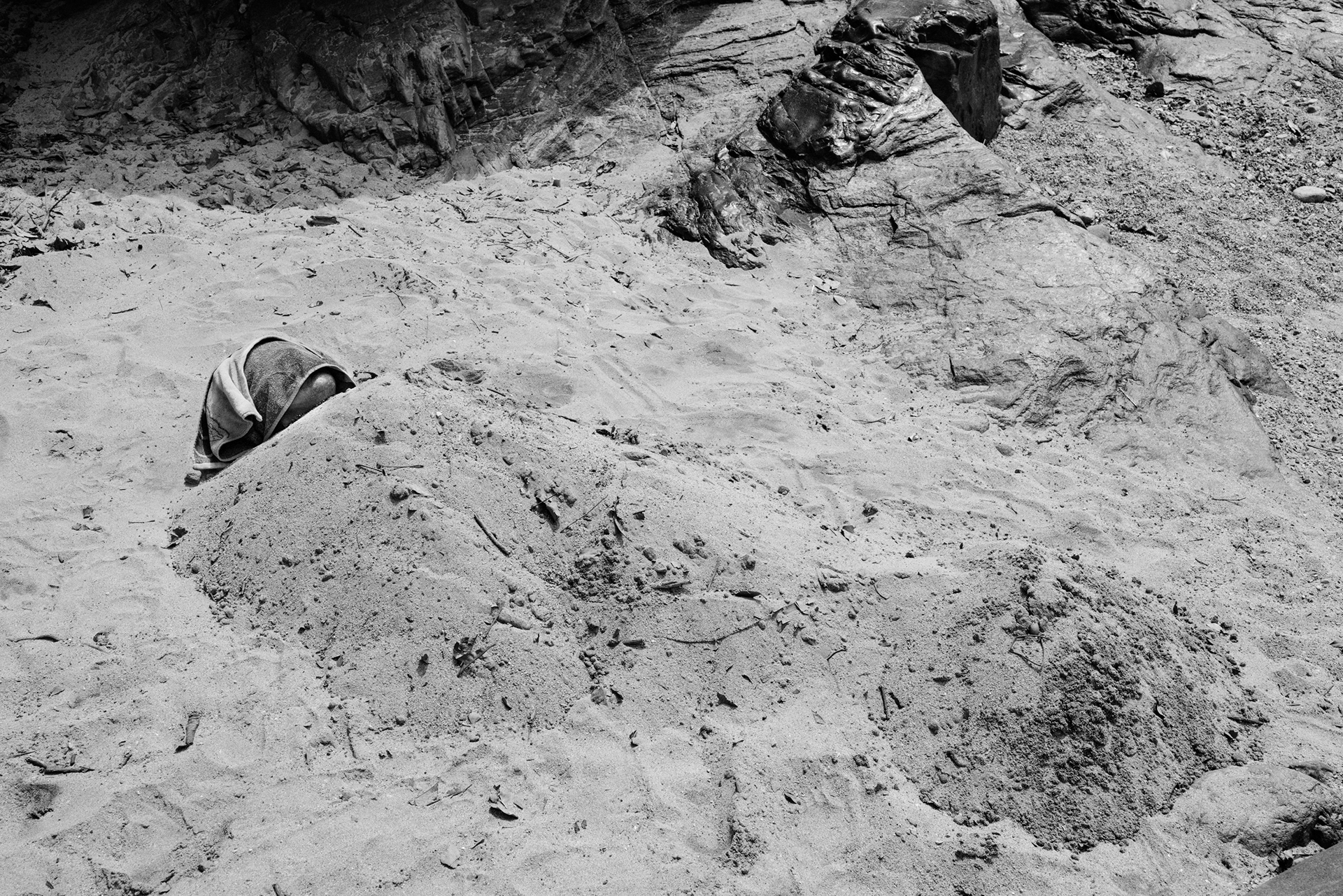
Native doctors believe that some illnesses are symptoms of spiritual imbalances. These conditions get treated using natural methods, which may include medicinal plants and various organic materials to restore overall well-being.
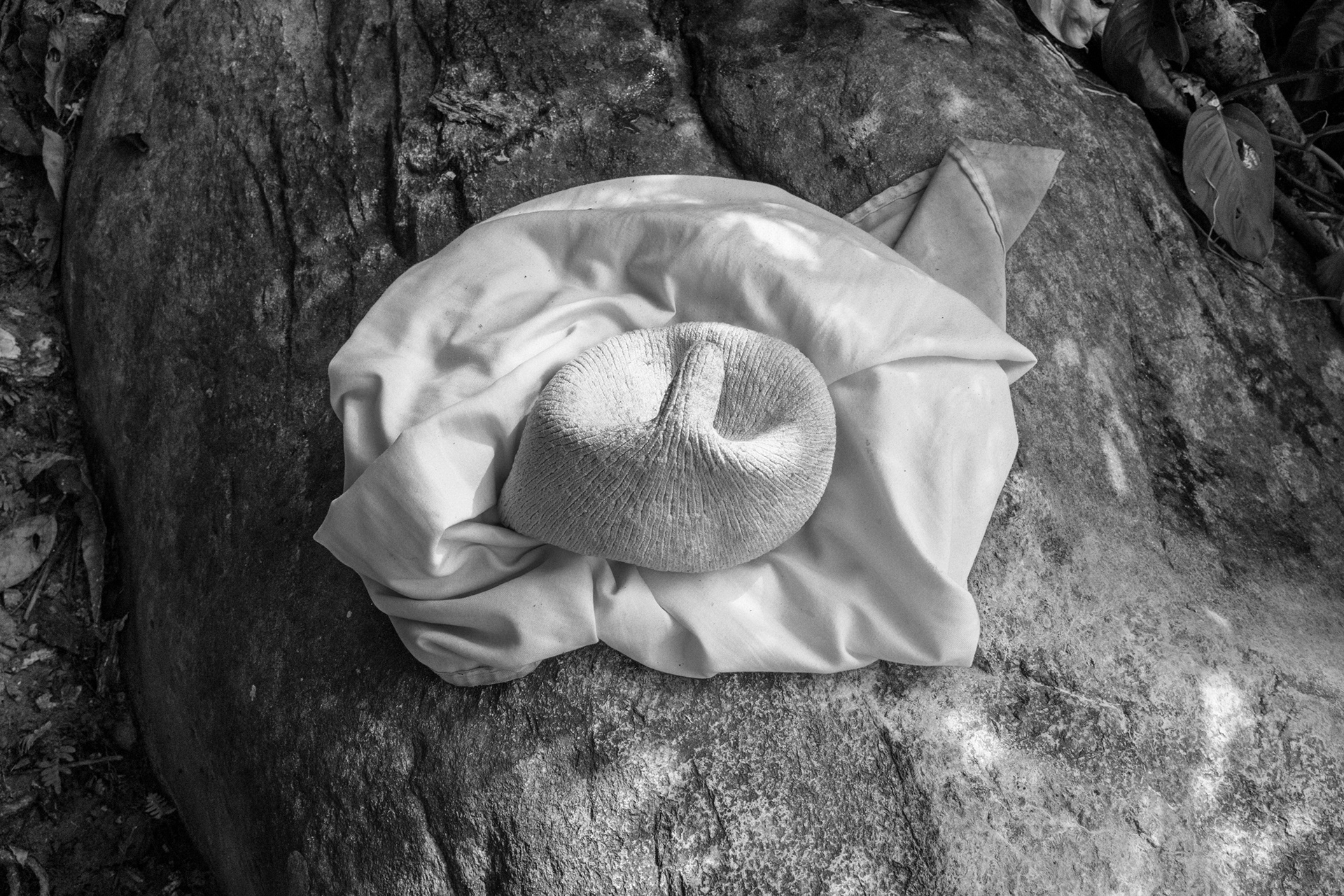
For the native populations inhabiting the Sierra, this headdress symbolises the mountain, protects their thoughts, and helps them remain connected to its spirit.

The settlements can be separated by several hours or even days of walking. Access to these remote areas is primarily through “Caminos” or “Trochas," narrow paths that can only be navigated on foot or with the help of pack animals like donkeys, horses, or cows.
The settlements can be separated by several hours or even days of walking. Access to these remote areas is primarily through “Caminos” or “Trochas,” narrow paths that can only be navigated on foot or with the help of pack animals like donkeys, horses, or cows.

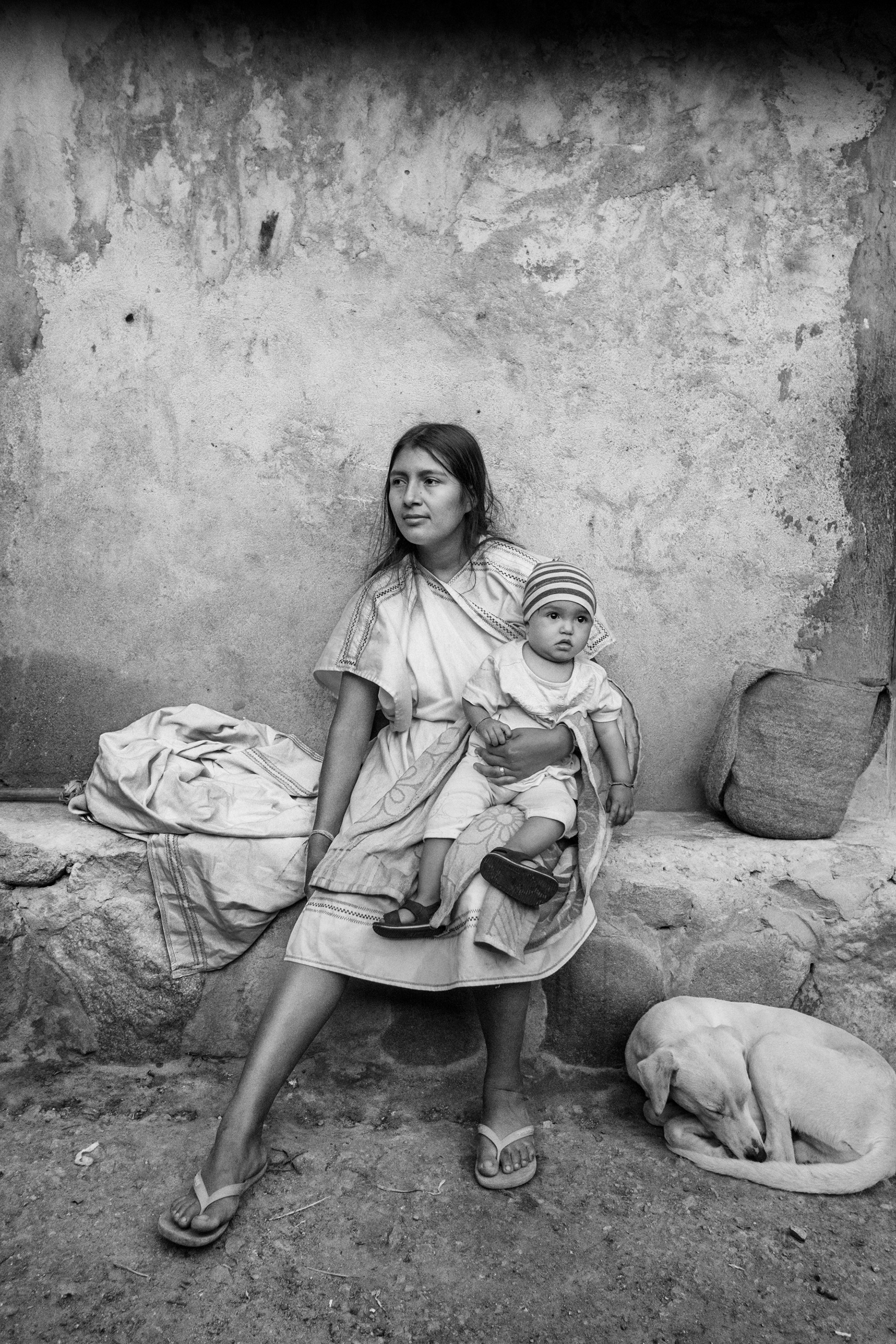
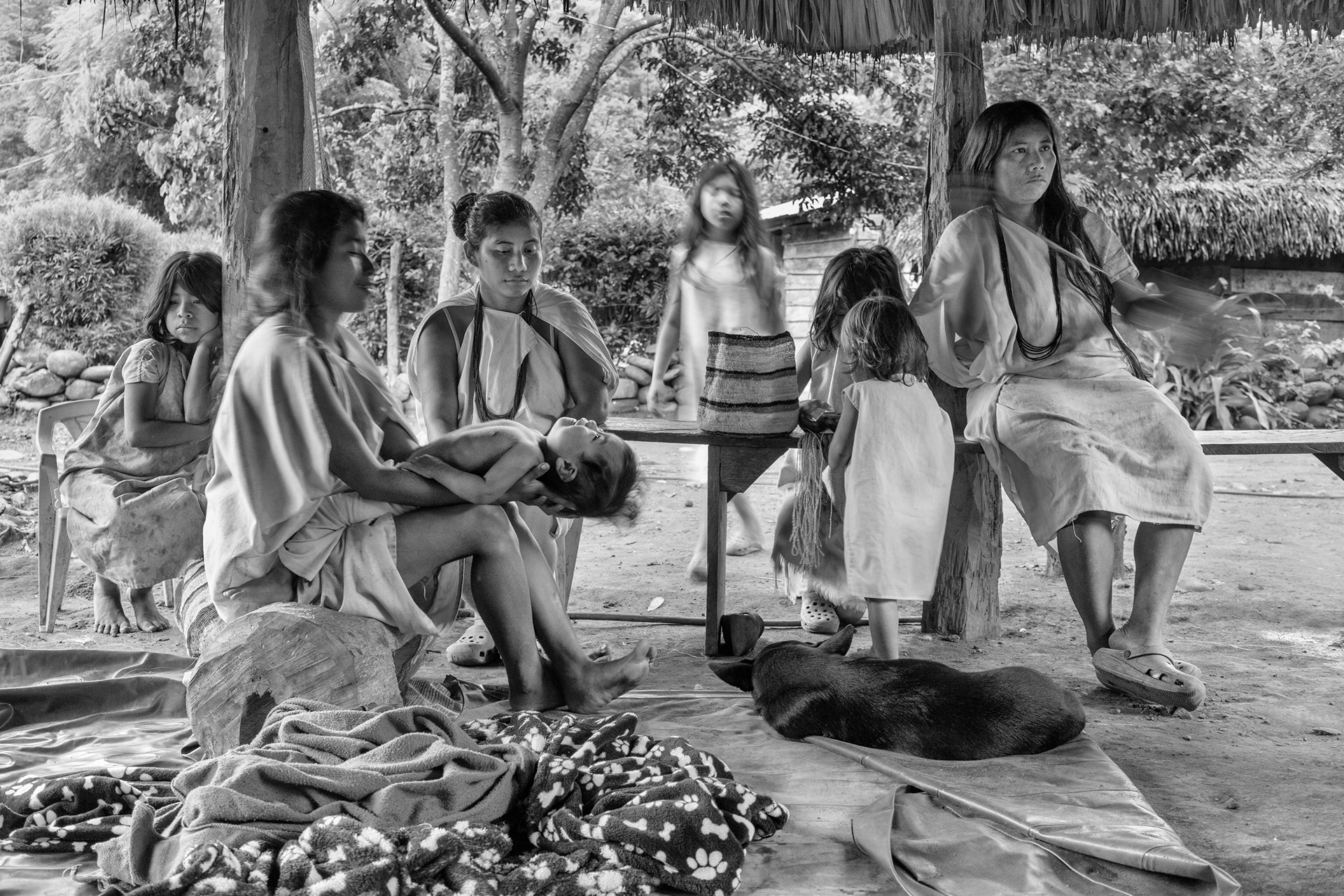
Young woman from the Arhuaco tribe with child, Sabana Crespo, Sierra Nevada de Santa Marta 2025. Most of the births take place at home, and pregnant women are followed throughout the pregnancy by traditional midwives called Parteras, who take care of the physical and spiritual health of the newborn.
Most of the births take place at home, and pregnant women are followed throughout the pregnancy by traditionalmidwives called Parteras, who take care of the physicaland spiritual health of the newborn.

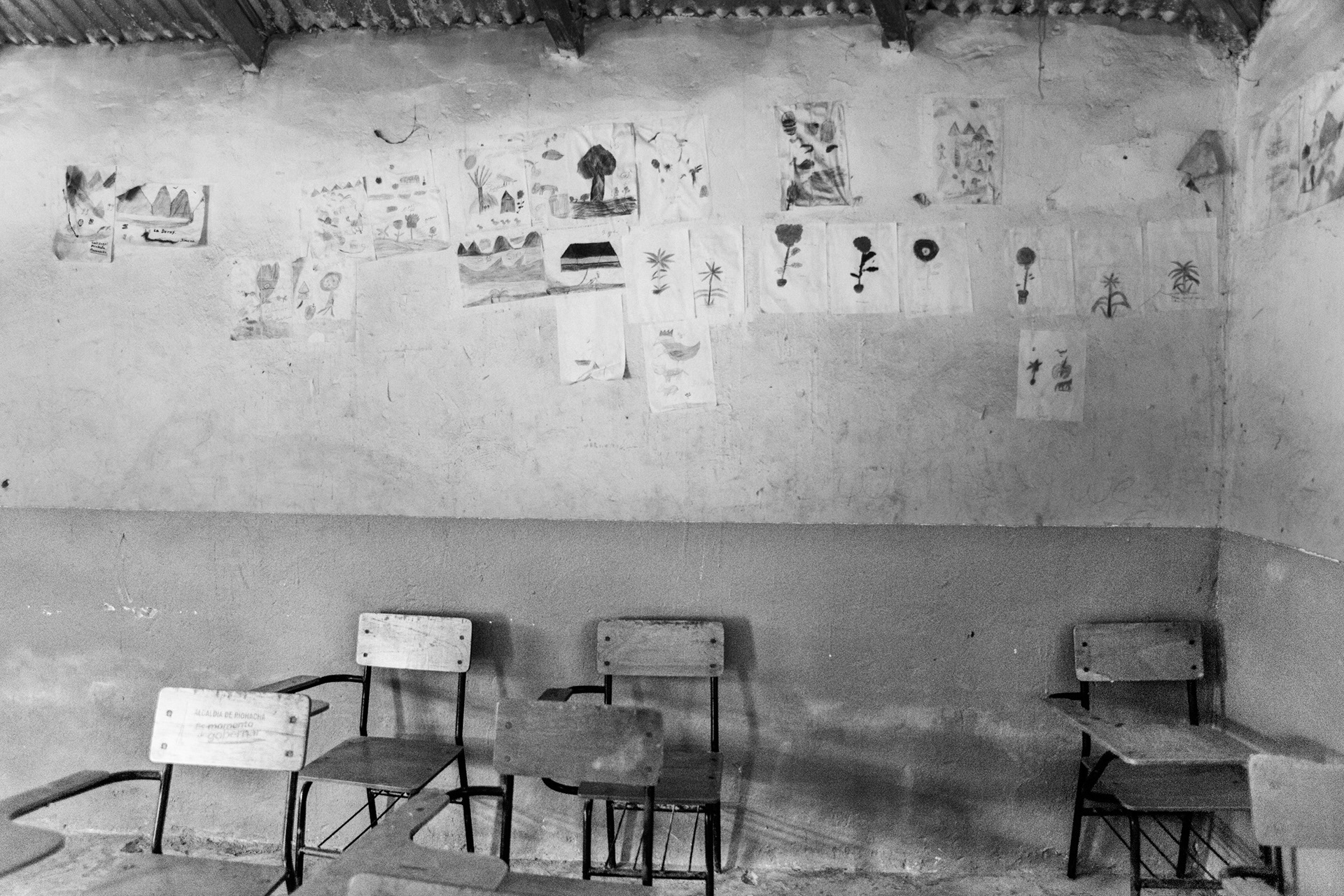
Children from different ages and settlment receive the primary education from native and nonnonative teachers.
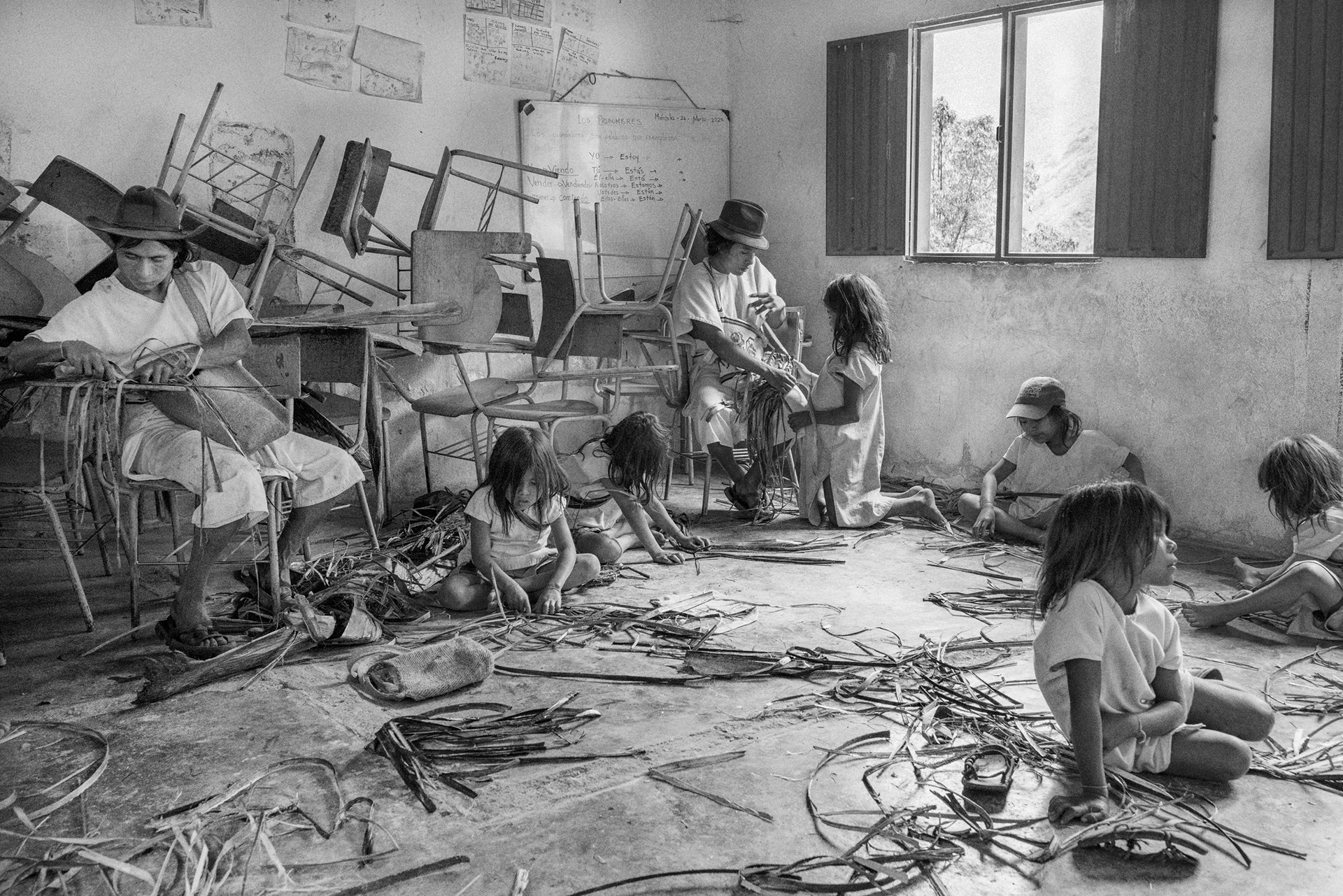
Children in the community receive both Western and traditional education during their primary years. The community offers schooling up to high school. Across Colombia, various tribes are establishing Indigenous universities to provide academic formation.
Weaving is regarded as a spiritual activity that helps focus the mind. Each “mochila” is created with a specific spiritual intention. Through conscious thought, the community believes the object can be infused with the energy needed to fulfill its purpose.
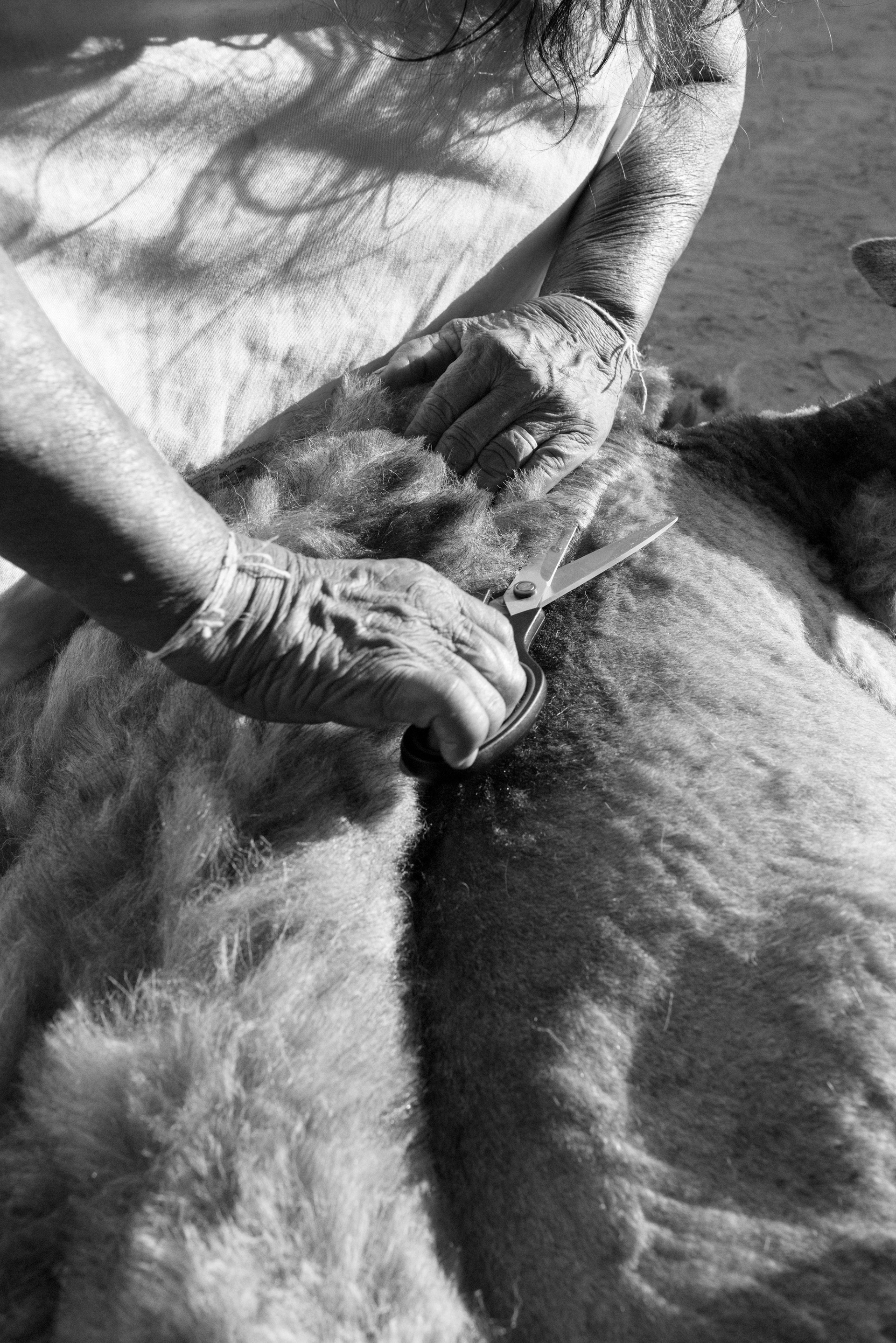
Sheep and goats are bred both as a source of nutrition and to collect wool for artisanal production.
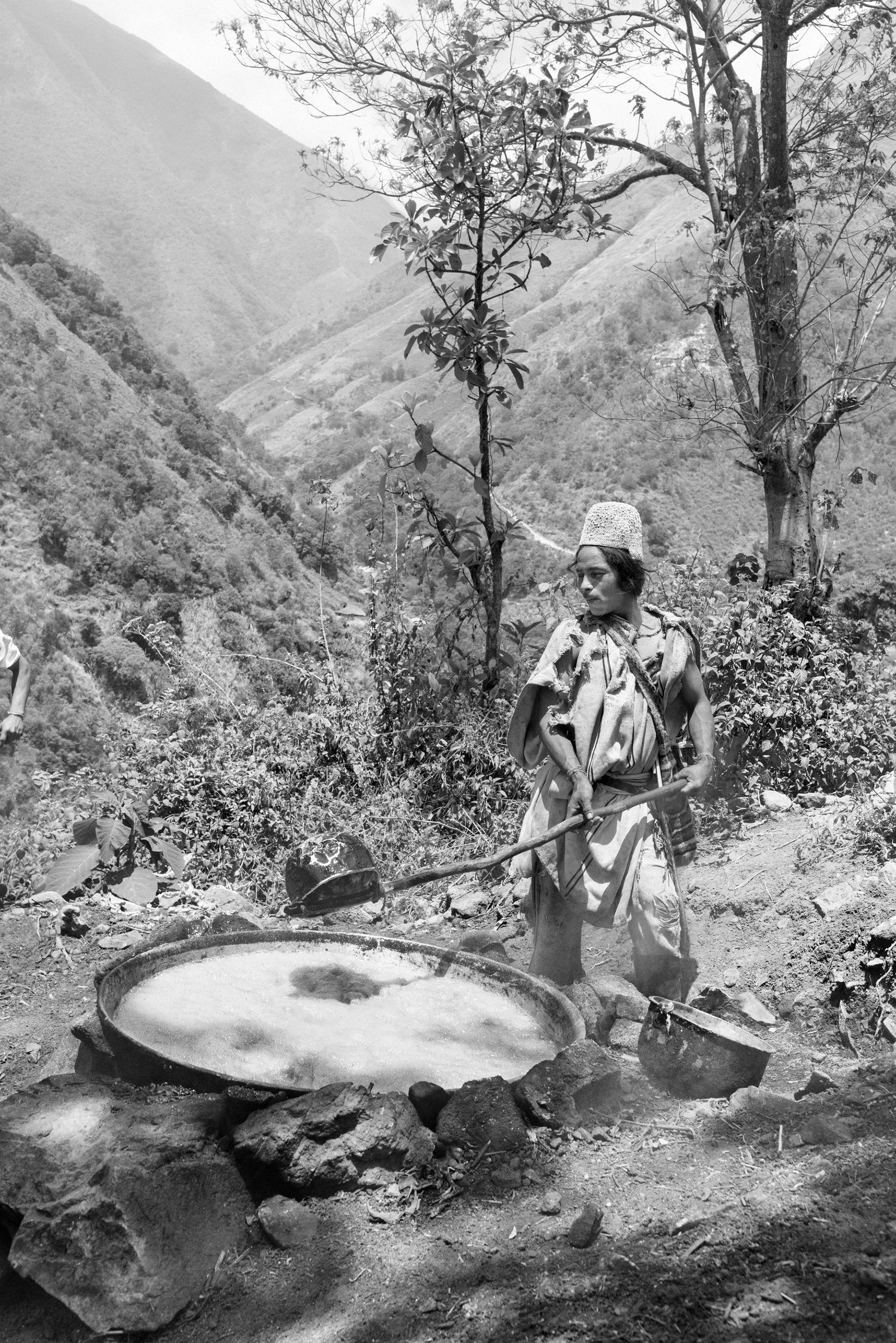
Sugarcane is used for human and animal sustenance, aswell as for small production for trade or the local market. Typically grown in the lower regions of the mountain, sugar cane is spreading to other areas of the Sierra Nevada due to climate change and global warming, reaching altitudes of 2,000 meters.
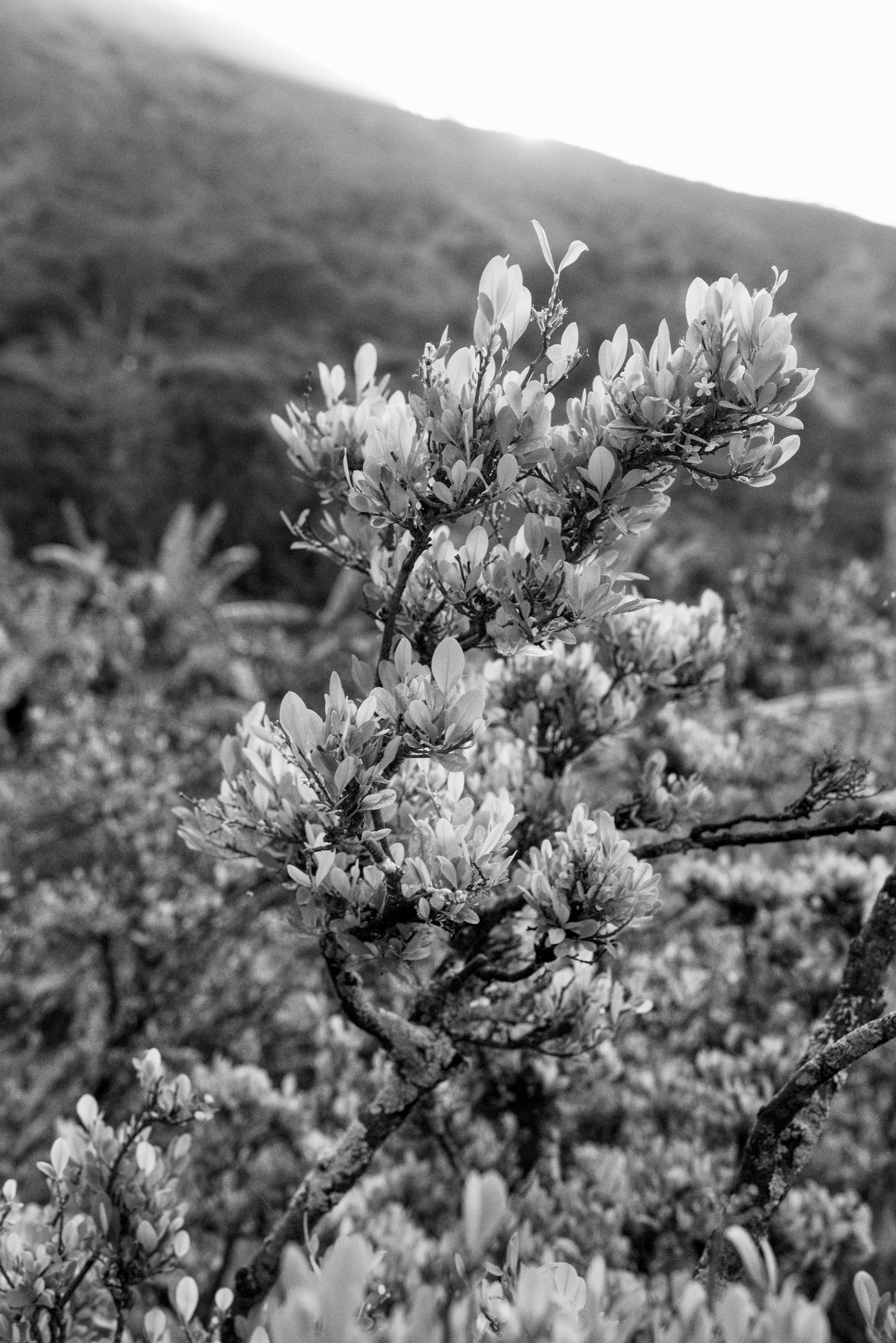
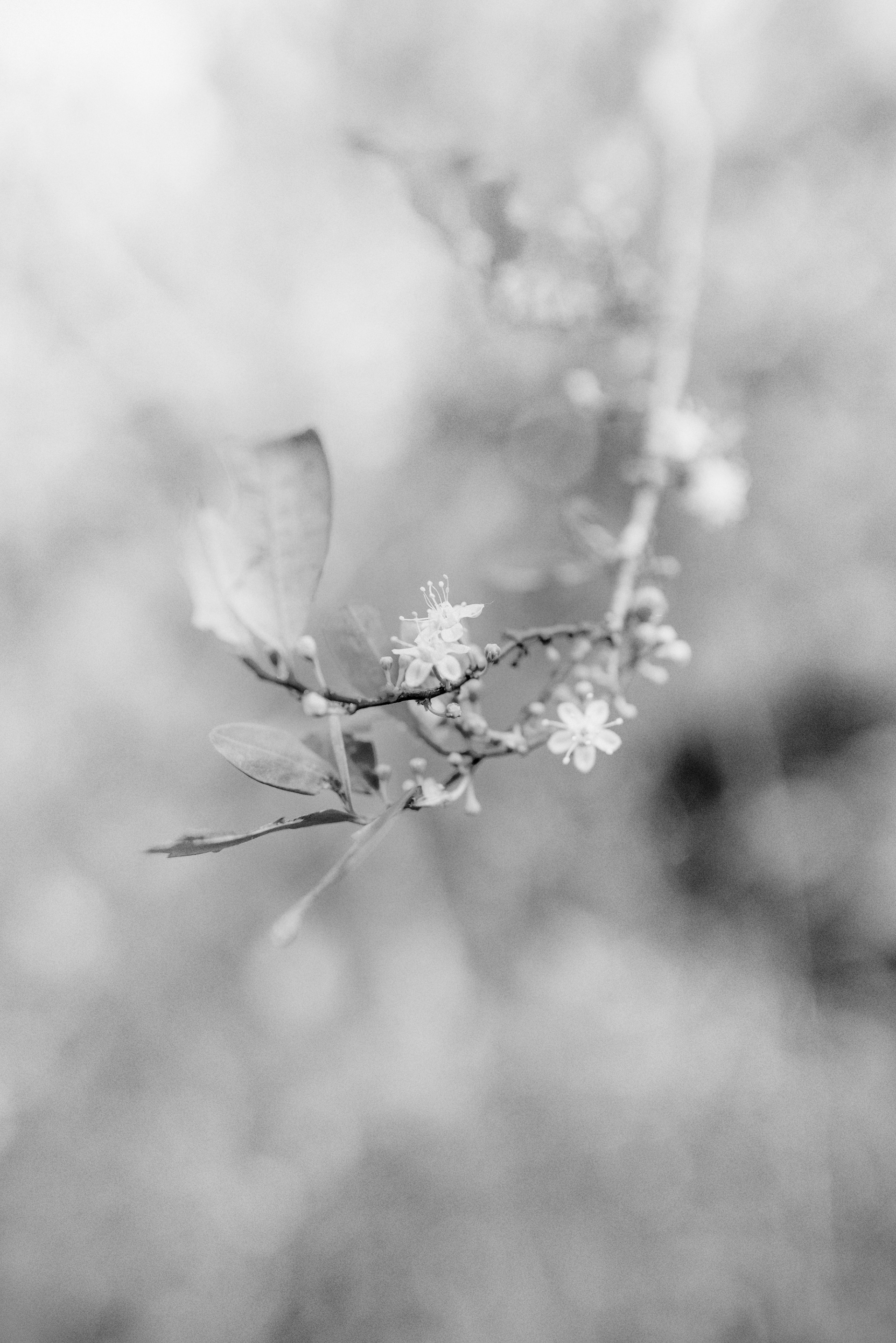
The Coca plant serves as a food source, the foundation of their spiritual practices, and a source of knowledge, shaping their society and their entire system of relationships with the surroundings.
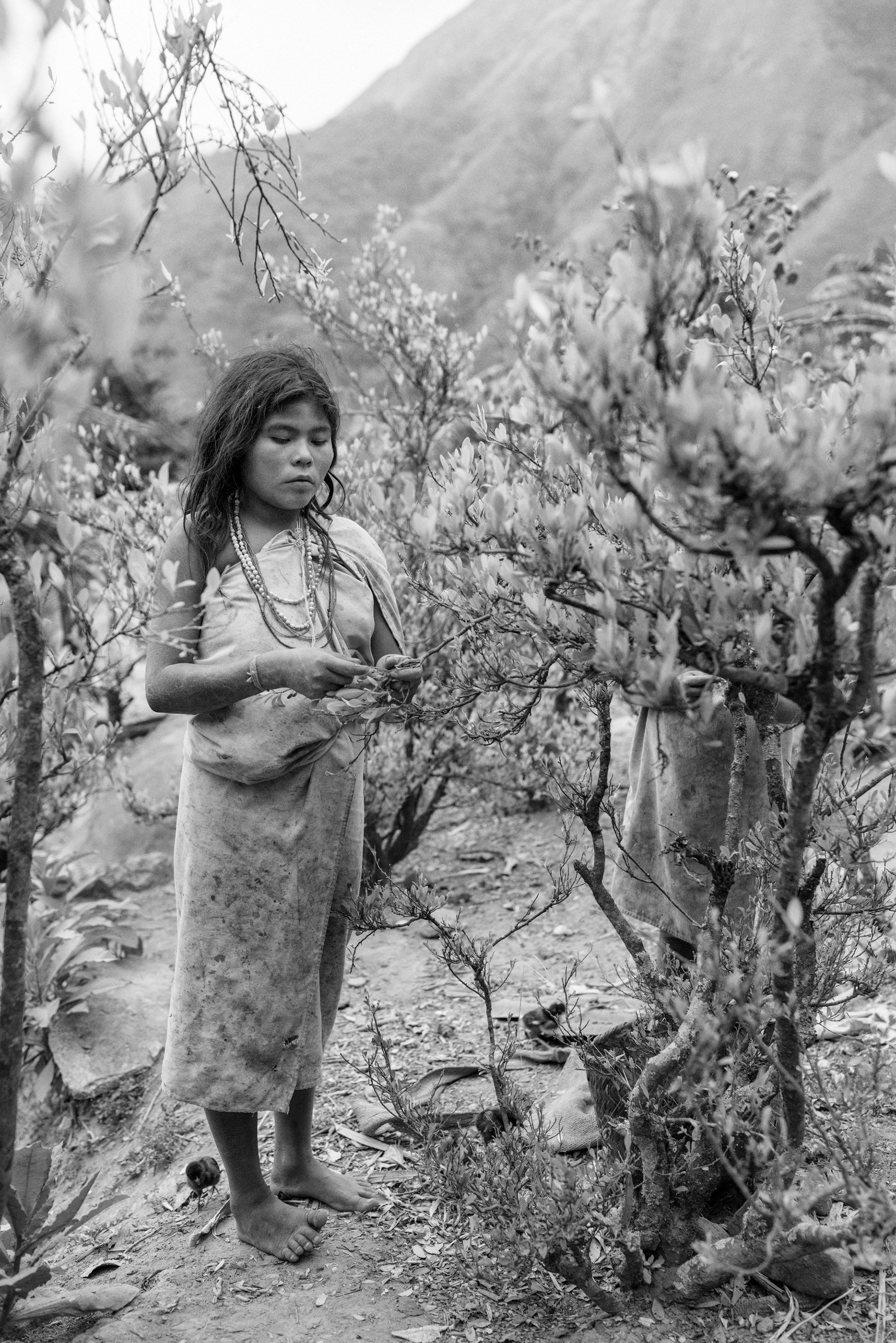
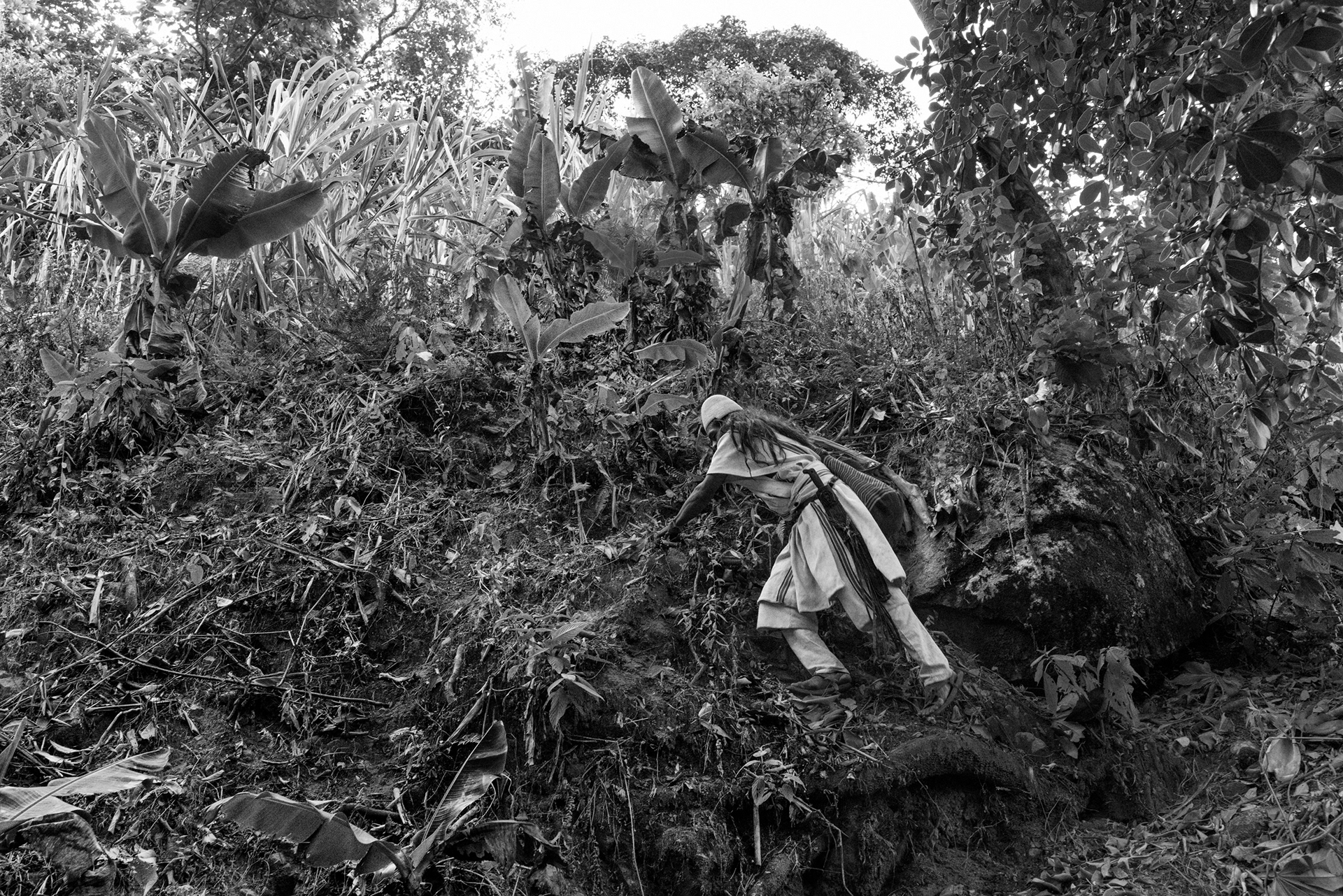
Ayu (Coca plant) is the basis for their spiritual practices, a source of knowledge, and a food resource. Traditionally, only women are allowed to collect the leaves of the sacred plants.

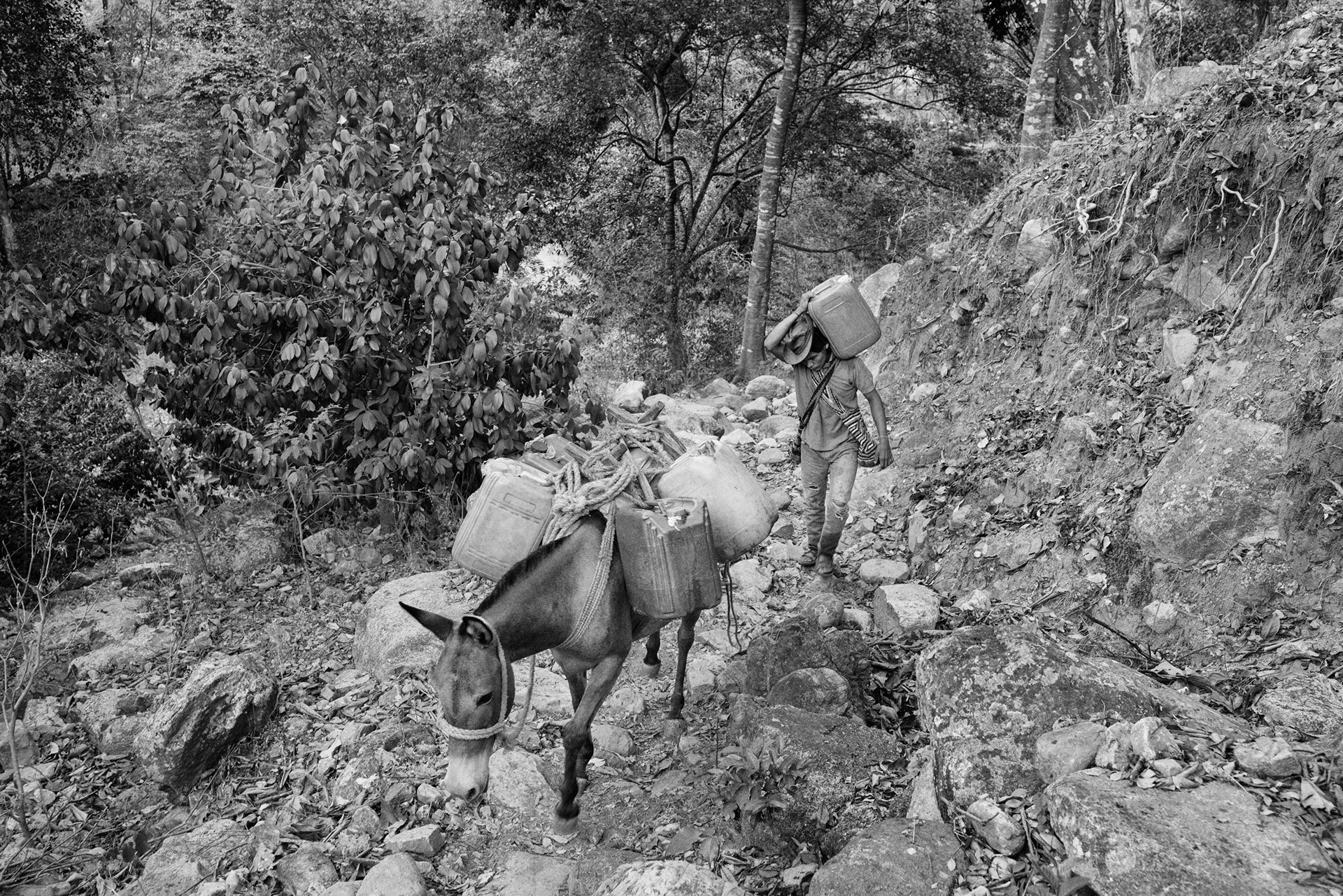
Due to climate change, the nearest stream of water dried up, forcing the community to cover a greater distance to obtain water. 
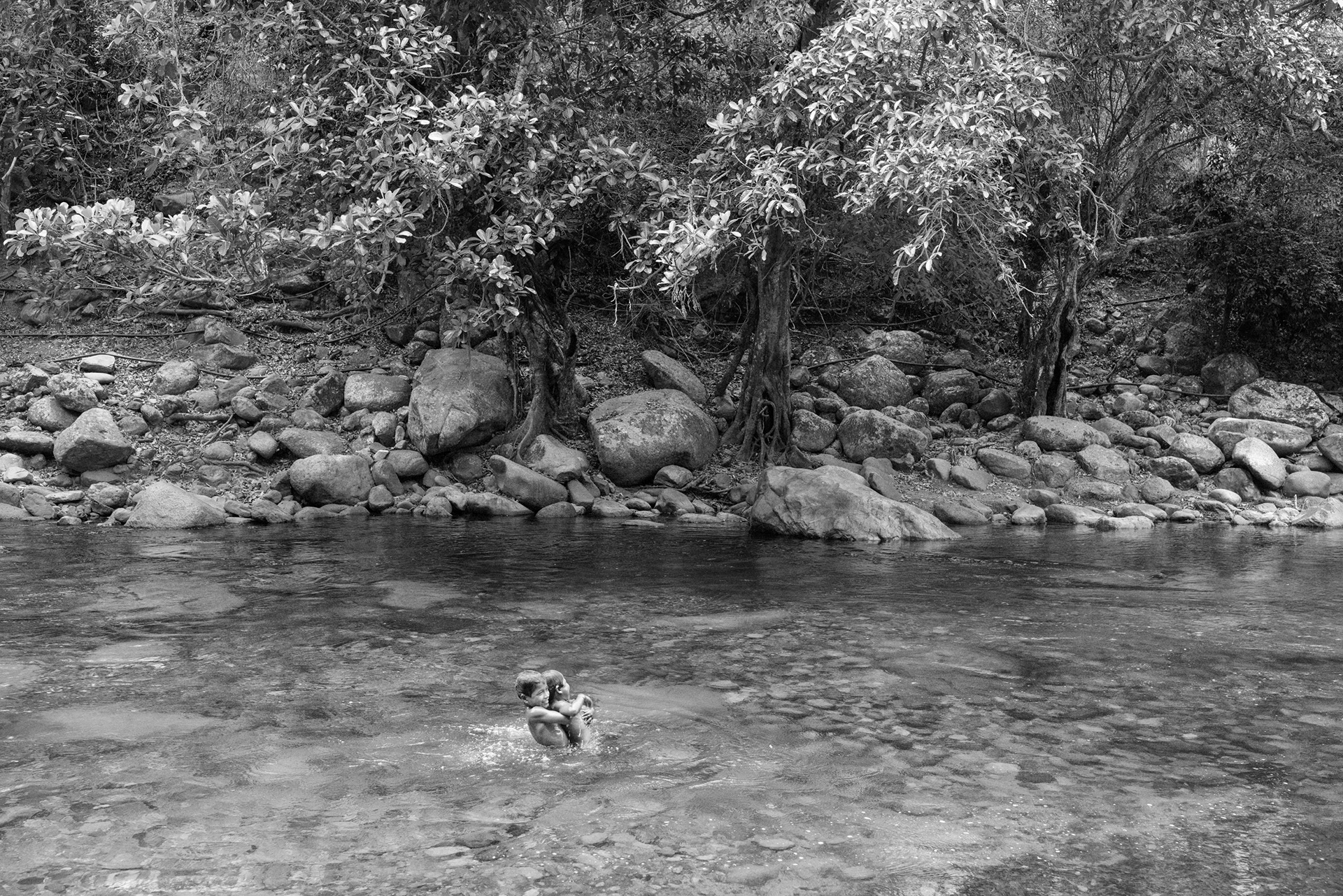
The bribe worship rivers as a deity, a source of life and healing. The river is essential to the community’s survival as a water supply.
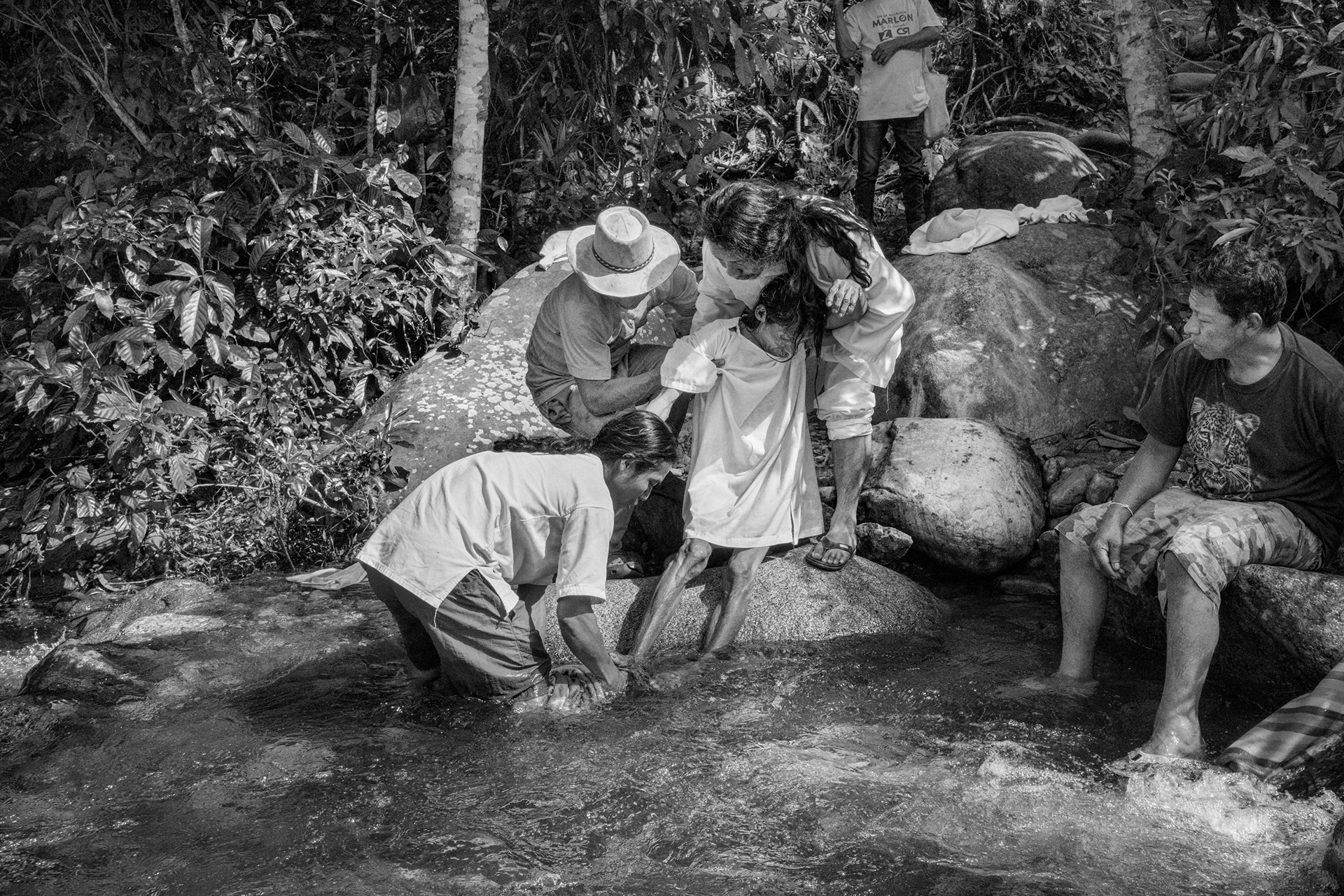
Young people from the Wiwa tribe are assisting a Mamo (spiritual guide) in the Kogui community, currently undergoing treatment. Mamos serve as both spiritual and political authorities. Through divination, they determine the spiritual responsibilities that each community member must fulfill to ensure harmony within their activities and maintain balance within their families, the community, and Mother Nature
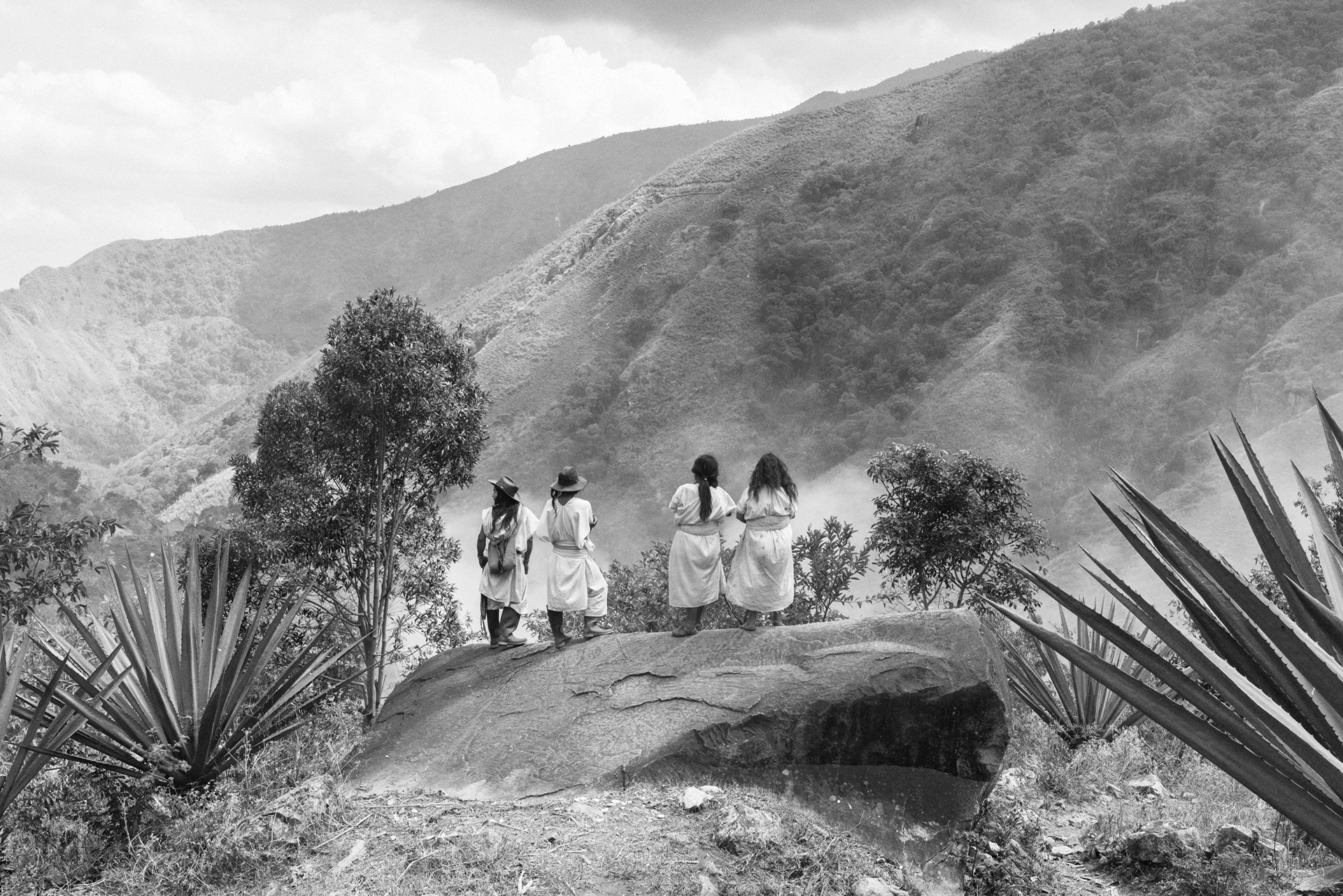
Members of the Arhuaco community observe a fire that threatens their homes. The transition between the dry and rainy seasons has become increasingly unstable, resulting in strong winds that can cause small fires, typically set to manage weeds, to spiral out of control. 

Back to Top